
A Rose by Another Name
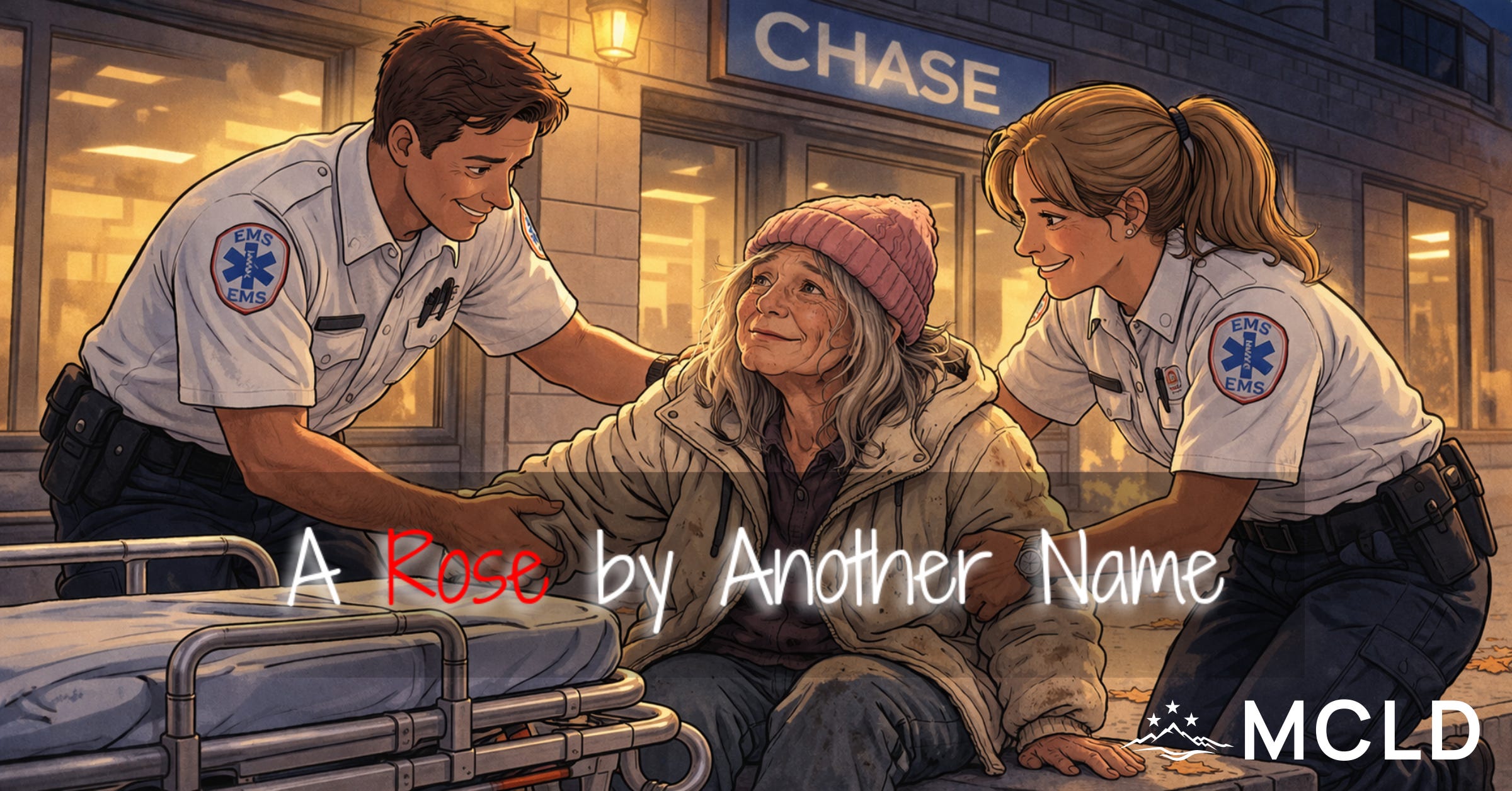
The first time I called her Margaret, she let us help her up.

By then, I knew her.
Or at least I thought I did.
For six months, maybe eight, working midnights as a rookie paramedic in Brooklyn, I had picked her up more than a dozen times. She was usually only a few blocks from the same area, sometimes one side of 5th Avenue, sometimes the other, but never far. On that night, she was in front of the bank on the corner at 8202 5th Avenue.
To us, she was Rose.
That was never meant to be cruel. It was the kind of nickname that starts in EMS the way nicknames often do. She almost always had a bottle of Wild Irish Rose either in her jacket pocket or lying on the sidewalk near where she landed. So, on my paper Ambulance Call Reports (ACR), with my BIC pen, I would block print the following...
First Name: ROSE
Last Name: UNKNOWN
Address: UNDOMICILED
I had done it more than once and never gave it much thought.
Then one night in the emergency department, I handed the hospital copy of the ACR to the clerk to register her, and she looked at me and said,
“You know her name isn’t Rose, right?”
That caught me off guard. She said,
“Her name is Margaret.”
Then she gave me an address. A few blocks away. Close enough that it hit me right then that no matter where we found her, she was never really all that far from home.
That stayed with me.
So, the next time we got sent for her, I already knew something I had not known before.
It was on the cooler side. Late fall, maybe. She was lying on the sidewalk in front of the bank, curled onto her left side in a loose fetal position. She had on an ivory bubble jacket, dirty and stained from too many encounters with the ground. On her head was a pink hand-knit hat pulled down over mousey brown, greasy hair.
She looked like she usually did.
Smiling in that loose, alcohol-softened way I had come to recognize. Eyes heavy. Half-closed. That familiar look of someone too drunk to care much where she had ended up.
On the earlier calls, she never made things easy.
If we tried to help her up, she would wiggle, resist, swat a hand away, make us work for every inch of movement. My partner and I, sometimes with a pair of cops helping, would each take an extremity, lift her up onto the stretcher, and get the seatbelts across her fast before she rolled right back off.
That was the routine.
That night I walked up and said,
“Margaret, we need to get you to the hospital. You can’t stay out here on the street.”
Her face changed.
The smile got bigger, yes.
But that wasn’t the part that hit me.
Her eyes opened wide.
Not the usual half-lidded, squinty look. Not the expression the alcohol wore for her on most nights. They opened wide like something real had cut through the fog.
It was the look of, you know me.
Then came the part I had never seen before.
She started trying to get up.
No swatting.
No wiggling away.
No fighting the help.
Just a smile, maybe a little giggle, and an effort to rise.
My partner and I stood on either side of her, each putting an arm under hers to help her up and steady her. Her legs were weak and wobbly from the drinking, but she accepted the help. She let us guide her to the stretcher. She sat down without a struggle.
That was the moment.
Not some dramatic save.
Not some big speech.
Not a miracle.
Just one woman on a Brooklyn sidewalk, in a dirty jacket and pink hat, letting us help her because for once she knew we knew who she was.
Once she was seated, even her body language felt different. Softer. More vulnerable. Comfortable in a way she never had before. She no longer felt like a burden being managed. She felt like someone accepting help from people she trusted.
I still think about how small the difference was.
One word.
Not medicine.
Not force.
Not persuasion.
Just the right name.
This job teaches you shorthand. Some of it is useful. Some of it helps you survive the repetition of long nights, familiar corners, and repeat patients you think you know. But every now and then, the shorthand gets in the way.
Rose was shorthand.
Margaret was her name.
And on that cool night in Brooklyn, the difference between the two changed the whole call.
About the author
Mike Chanat is a paramedic, leader, and educator with nearly four decades of experience in emergency medical services, fire, and law enforcement. He writes about leadership, presence, and the human moments that shape those who serve.
Shakespeare's famous quote is that "a rose by any other name is still a rose." Margaret's response to being called by her correct name showed clearly that when we call someone by their name, it makes a huge difference. They feel seen and valued.